
- News
- City News
- chennai News
- En route to career with booming opportunities
Trending
This story is from June 19, 2018
En route to career with booming opportunities
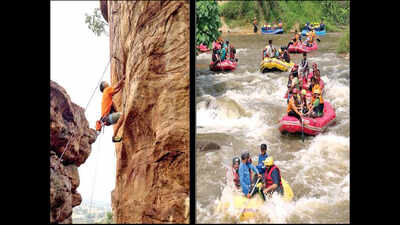
The Union ministry of tourism is promoting 28 adventure sports including rock climbing, trekking, hang gliding, paragliding and river rafting

While private tour operators are the frontrunners in the industry, earlier this month the Union government too decided to take up a more active role in the sector by declaring 2018 as the Year of Adventure Tourism. The Centre’s decision to open up 104 additional peaks in Jammu and Kashmir (Leh area) positions the Indian Himalayas as a bigger adventure tourism destination. The ministry of tourism has also formulated safety guidelines that promote 28 adventure sports including trekking, hang gliding, paragliding and river rafting.
And this is just going to keep growing, believes Deepika Chowdhry of Adventure Tour Operators Association of India (ATOAI) which worked with the government on creating the safety guidelines.
From instructors, guides, tour planners, tourism ministry positions or entrepreneurs, the career path of a student with a love for the outdoors is varied. A student can choose from short-term courses for tourist guides or mountaineering instructors to full-time BBA (tourism and travel), and supplement it with an MBA. "Students are taught both the theory of tourism management and also get an opportunity to work in the industry for more than six months," says Jeet Dogra, assistant professor at Indian Institute of Tourism Management, an autonomous body under ministry of tourism.
"Tourism industry is dominated by youngsters and startups are playing an important role in the business. Catering to the demand, tourism is now one of the emerging academic disciplines in the social science," he says.
Technical aspects apart, it’s the familiarity with the region, affable personality and knowledge of more than one language that will hold aspirants in good stead, points out former TN tourism development manager N Ravi. "A graduate in history or geography can take up short-term training or work with tour operators to gain experience and then set out on their own," he says, adding in Tamil Nadu nearly 30,000 guides fluent with Hindi and another foreign language are required.
"The key is to identify the needs of a tourist. Visitors should be provided a wholesome experience. A visitor to Mammallapuram should get to eat south Indian food, visit the Pallava era monuments and try surfing," says Ravi, who now runs the travel firm Tour Boss.
Get the latest lifestyle updates on Times of India, along with Women's Day wishes, messages and quotes !
End of Article
FOLLOW US ON SOCIAL MEDIA










Hot Picks
TOP TRENDING
Explore Every Corner
Across The Globe
Krishnagiri Child MarriageNoida AirportSamsung Employee ProtestWomen's Day WishesWomen's Day MessgaesWomen's Day QuotesKarnataka Movie Ticket PriceRanya RaoBengaluru SuicideSunil ChhetriLamelo BallJohn Cena WWE Championship VictoriesRussell WilsonRanveer AllahbadiaStephen CurryAndy IsaacJa MorantNarendra ModiNikola JokicCharles BarkleyStephen Curry Emotional MeetingTaylor SwiftShaquille O NealWWE Smackdown PreviewJoe BurrowCarson SoucyBank Holidays in MarchPublic Holidays in MarchIND vs NZ Head to HeadICC Champions Trophy Live Streaming
Hot on the Web
International Women Day 2025Happy Women Day 2025Ranya Rao Gold Smuggling Case LiveHappy Women's Day WishesWomen's Day WishesRanya RaoSandeep Reddy VangaVirat KohliSamay RainaWomen’s Day GreetingsWomen's Day Wishes 2025Okra Water BenefitsMagnesium Oil BenefitsChia Seeds BenefitsBrain ExercisesLaughter Chefs 2Sadhguru QuotesKalpana RaghavendarChhaava Box Office CollectionArmaan MalikJapanese Dora Cake RecipeAncient Beauty SecretsNASA Beautiful PicturesSadhguru Diet HabitsPumpkin Seeds BenefitsNational Parks In USUnique AnimalMoney Attraction PlantsMysore Masala Dosa RecipeLemons Benefits
Trending Topics
Wayne GretzkyJoe BurrowNBA Trade RumorsStephen CurryAuston MatthewTaylor SwiftTravis KelceLebron JamesSteve KerrJalen GreenManny MachadoVALORANT Patch 10.04Red Sox Manager Alex CoraMarvel RivalsJosh AllenTom BradyGTA 5s New PC UpdateConnor McdavidJa MorantPubg Mobile 3.7 UpdateNyt ConnectionsHailee SteinfeldsJujutsu Infinite CodesWordle HintsNyt StrandsApple MacBook AirBuying Second Hand CarsLive Cricket ScoreIPL Schedule 2025ICC Champions Trophy 2025 Live Streaming
Popular Categories
HeadlinesSports NewsBusiness NewsIndia NewsWorld NewsBollywood NewsHealth+ TipsIndian TV ShowsTechnologyIPLTravelEtimesHealth & FitnessWWENFLICC Champions TrophyAstrologyWeather TodayHow to watch IPL 2025How to watch IPL in CanadaHow to watch IPL in USAStock Market HolidaysNSE HolidaysBSE HolidaysMCX HolidaysSettlement Holidays List 2025Technology NewsInternational SportsPublic HolidaysBank Holidays
Latest News
NBA Offseason Rumors: Los Angeles Lakers could sign $35 million Chicago Bulls guard to support Luka Doncic and LeBron James in their Championship runHow companies are invoking women power in AI eraChhaava box office collection Day 22: Telugu release of Vicky Kaushal starrer boosts week 4 earnings; film crosses Rs 490 crore markRupee gains 24 paise against $, best weekly show in 2 yearsSamsung union calls off protestSebi to focus on enhanced transparency: Chief PandeyOIC backs Arab nations’ alternative Gaza plan against Trump’s 'Riviera'Gene Hackman's cause of death revealed as heart disease; actor died 1 week after wifeTaarak Mehta Ka Ooltah Chashmah: Did you know Disha Vakani aka Daya Bhabhi was also part of Aishwarya Rai and Hrithik Roshan starrer 'Jodha Akbar'?Forex reserves drop $1.8 billion to $639 billionGreat expectations, of style & substanceRBI OKs 1-year extension for IndusInd CEO, not 3 years as soughtMNCs see rise in women leaders'We feel like pioneers': Trump hosts Crypto Summit at White House, vows to make US a leader"Another mediocre bottom 6 player”: NHL fans fume over Scott Laughton’s addition to the Toronto Maple LeafsMeghan Trainor gets a breast lift and implant: Know the pros and cons of breast augmentationTaylor Swift's fitness routine is not linked to Travis Kelce, celebrity trainer reveals techniques to maintain peak performance shapeDalit woman raped, paid Rs 2.5 lakh to buy her silence
Copyright © 2025 Bennett, Coleman & Co. Ltd. All rights reserved. For reprint rights: Times Syndication Service